
Load Lock

SAMPLE INTRODUCTION

Vacuum Load Lock
for Sample Introduction

Introduce samples without venting the main vacuum system, with coordinated loading and transfer functions.
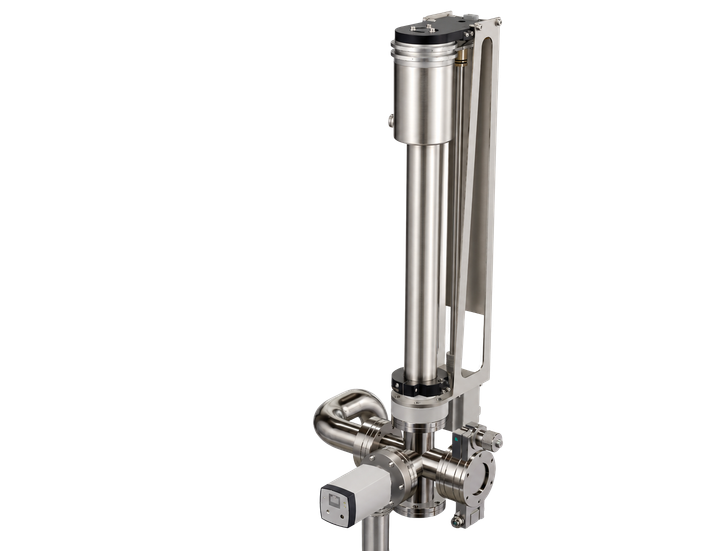
Load LockOPKI / SAMPLE INTRODUCTION
Designed for your workflow

Introduce samples without venting the main vacuum system, with coordinated loading and transfer functions.

Protect the main vacuum

Load and unload samples through a dedicated introduction chamber.

Coordinate sample transfer

Motorized linear positioning, manual rotation and end-position sensing.

Configure the pumping

Standalone or shared pumping arrangements to suit the system architecture.

Engineering information

Technical data

Select the configuration that fits your instrument.

Function Sample introduction without venting the main chamber
Linear positioning Motorized
Rotation Manual
Position monitoring End-position sensors
Access configuration Quick-access viewport or blank-flange arrangement
Closure monitoring Open / closed status sensing
Pressure monitoring Dedicated pressure gauge
Venting protection Overpressure safety valve
Pumping integration Standalone or shared pumping configuration

Specifications depend on the selected configuration. Interfaces, operating conditions and final dimensions are confirmed during technical review.

Adapted to your application

Configurations & options

Chamber access

Select a viewport or blank-flange access arrangement.

Pumping architecture

Define the pumping connection and pressure-monitoring configuration.

Transfer integration

Adapt the mechanical interface to the sample-transfer path.

Control sequence

Configure loading and transfer sequences for your system.

Technical documentation

Specify your integration.

Request the technical datasheet and configuration-specific dimensional drawing for your application.

Request documentation

Vacuum sample introduction

Separate loading from the main vacuum chamber.

Define the introduction cycle

A load lock provides a dedicated chamber for sample loading and unloading. Specify the access arrangement, pumping connection, pressure monitoring and isolation from the main system for the intended introduction sequence.

Match the receiving transfer mechanism

Confirm holder geometry, transfer reach and alignment with the next chamber. Review closure status, pressure feedback and end-position sensing when defining coordinated operation. Pump-down time and operating pressure depend on the complete configuration.

Let’s define your configuration.

Tell us about your vacuum environment, sample format and transfer workflow. We will help specify the appropriate interfaces and options.

Discuss your application

I'm VAKOClose VAKO ×Your OPKI guideVAKO, the OPKI mascot

Hi, I’m VAKO.

Your guide to OPKI equipment.

What would you like to explore?

Find a product
Upgrade with OPKI ONE

OPKI ONE brings supported existing instruments and OPKI equipment together for control, graphical recipes and monitoring.

Have an older system? Tell the team its device models, current controls and what you would like to improve. Compatibility is reviewed for each configuration.

Explore an integrated system

Combine sample handling, vacuum chambers, sample preparation modules and control around your application. Explore our UHV sample preparation platform and its integrated functions.

Talk to the OPKI team